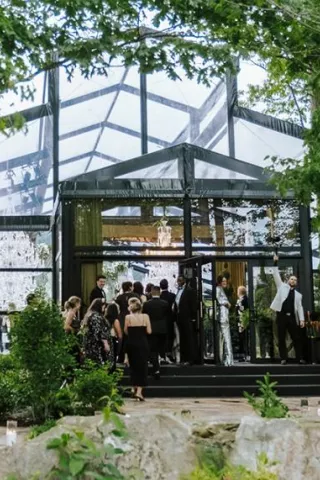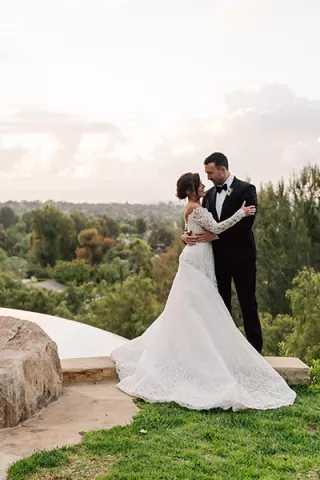
Every wedding comes with a finite amount of attention, budget, and energy - and the decisions couples make about where to direct those resources shape not just the look of the day, but the feeling of it. We asked experts across the industry the same question: what's getting too much emphasis, and what deserves more? Their answers are honest, consistent, and worth reading before you finalize a single line item.
The Details That Fade
There's a category of wedding spending that generates real excitement during planning and quietly fades into the background by the end of the night. Event planner Ashley Monge of Monge Amore Events has seen this pattern across countless celebrations - couples investing in details that look stunning on paper but don't ultimately shape how the day is experienced.
The intention is understandable: to create a celebration that feels abundant, layered, and visually complete. But when attention shifts too heavily toward visual impact alone, the elements that actually move people can become secondary.
Planner Tiffany Ott of Events By Tiffany J puts it simply: "One detail that's often overemphasized is adding décor that doesn't have a purpose and doesn't enhance the guest experience." Abundance, she notes, often reads differently in person than it does on a mood board.
Photographer Pamela Tatz has witnessed this from behind the lens: "I think that couples can over-invest in adding more elements - extra rentals, installations, or one-off details - with the thought that it will make the wedding feel more luxurious. In practice, those additions sometimes go unnoticed by guests."
Planner Marisa Furlong of I DO Need You Wedding Day Management frames it as a question of design philosophy: "When every element is layered, styled, and competing for attention, the experience can start to feel curated for the photograph rather than the moment itself. Not every space needs to be filled. Not every detail needs to speak." The restraint required to let key elements stand on their own - fully seen, fully felt - is itself a form of design intelligence.
Flow Over Flourish
Ask any experienced planner what makes or breaks a wedding, and the answer is rarely a floral installation. It's the flow. "Investing in a well-structured timeline, a strong vendor team, and behind-the-scenes coordination creates a seamless, elevated experience that guests remember far more than any single visual element," says Ott. "When couples shift focus from just how things look to how the event feels, the entire wedding becomes more impactful."
Furlong goes further, describing the skill required to execute a timeline in real time - not just build one on paper. "It's not just a well-built timeline, but how that timeline is carried out. Knowing when to begin. When to pause. When to allow a moment to unfold just a little longer." Guests feel the effect of this without being able to name it. The wedding simply feels right - unhurried, warm, effortless. That sensation is entirely engineered, and the engineers are good planners.
Monge agrees, noting that when pacing is off, the entire event suffers regardless of its visual ambition: "Timeline flow, supported by a strong planner or wedding manager, is everything. When pacing is off, the entire event feels disjointed regardless of how beautiful it is." From there, the cascade effect touches every vendor's performance - catering, photography, entertainment - all of which depend on a well-managed sequence of events to do their best work.
The Guest Experience, Reconsidered
Comfort is deeply underrated - and deeply felt. Tatz names it specifically: "Comfortable seating, thoughtful comforts like fans when it’s hot and blankets when it’s cold, and a cohesive flow from one part of the day to the next. When couples shift their focus away from quantity and toward how the day feels, the entire event becomes more memorable and refined.”
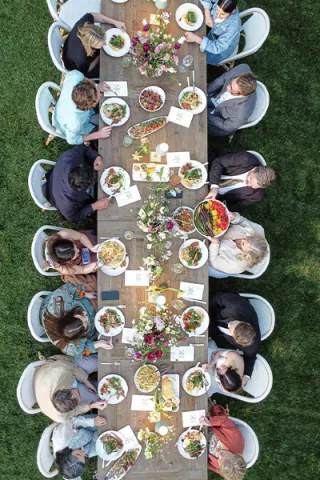
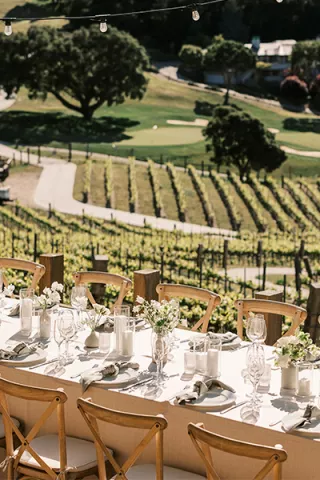
Shawna Austin of Enso Creative Team directs attention to the tablescape - not as décor, but as sustained environment: "The details that the guest experiences once they sit: the chair, the linen, the napkin, the plate, the candles. They stare at it for three hours. Make it worth looking at." Alongside that, Austin advocates for immersive event design that invites guests into the experience rather than asking them to spectate. "Today people are exposed to so many visual experiences. Do the photo ops. Make the event space immersive. Make every part of the event a photograph."
Pre-ceremony is another overlooked window. Alexa Landau of Solera & Co. makes the case for treating it as an intentional part of the event rather than a gap to get through: "The pre-ceremony window is often underestimated. Guests are arriving at different times, orienting themselves, settling in. Light entertainment - such as acoustic music or a curated playlist - creates ambiance and continuity. It softens the environment, elevates anticipation, and makes the event feel cohesive from the very beginning rather than starting abruptly."
"When couples shift their focus from how the day will look to how it will feel to move through, everything becomes more intentional. Guests feel at ease without knowing why," states Furlong.
The Ceremony Deserves More
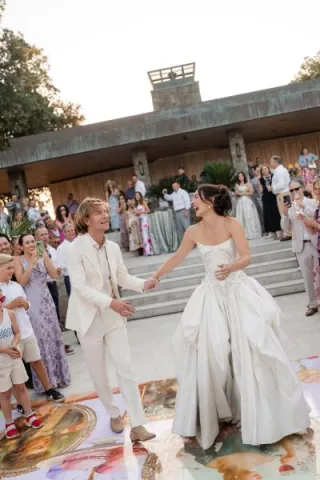
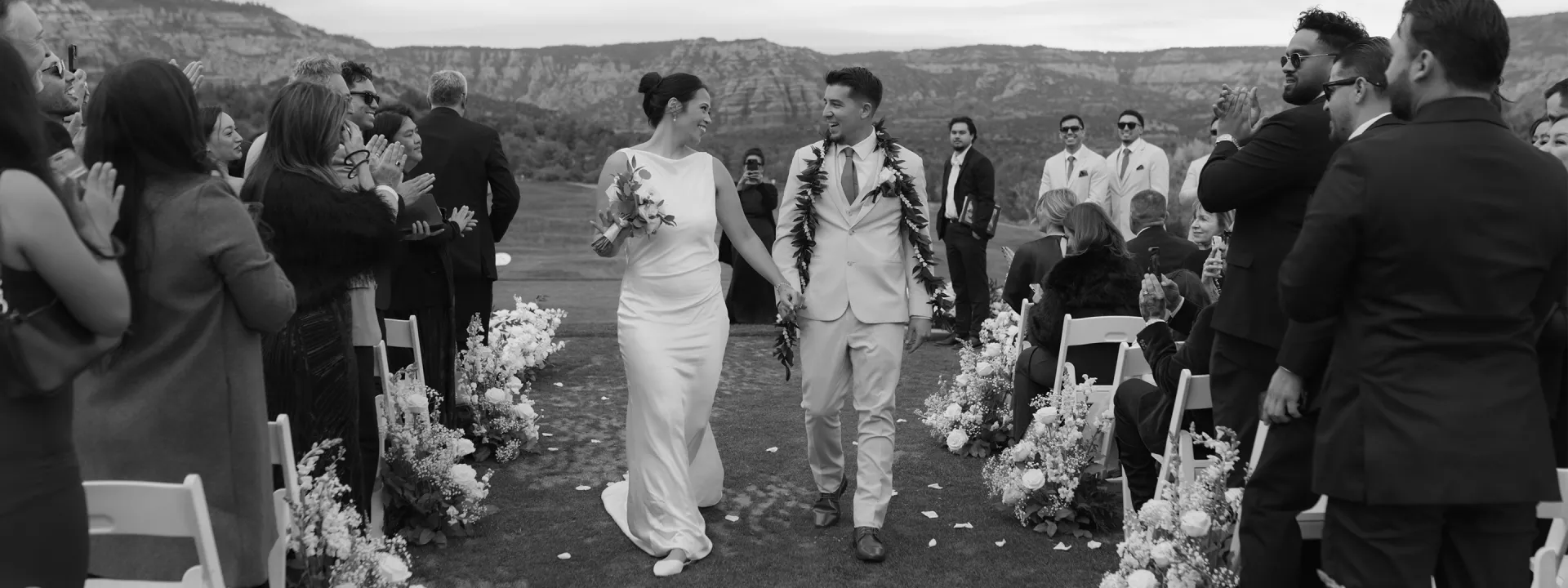
Harpist Ginger Rose Brucker offers perhaps the most pointed observation of all: couples spend months refining the reception while the ceremony - the reason everyone gathered - receives comparatively little investment. "This is the most emotionally significant part of the day and the moment where everything becomes real," she says. "Yet it's often rushed, under-planned, or treated as a formality rather than an experience."
Brucker is careful to clarify that she's not advocating for length or elaboration. "It's not about making it longer or more elaborate - it's about making it felt." Thoughtful live music, well-paced entrances, seamless transitions: these elements transform a short ceremony into something guests carry home. "When the ceremony is given the care it deserves, it creates the setting for the entire wedding and becomes the moment guests remember most."
Heather Balliet of Amorology echoes this from the planning side, emphasizing the value of trusting vendors to guide couples toward the choices that actually matter: "Trusting your vendors and planners can be a game changer, as they understand how to balance details that truly impact the flow and feel of an event. Often, it's the less obvious choices that create the most memorable moments and shape how guests experience the celebration."
Meaning Over Moment
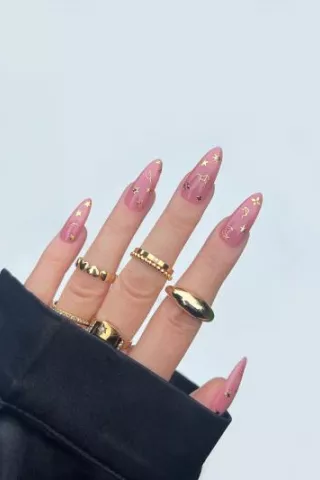
Jeweler Briana Daugherty of B. Anthony & Company brings a longer view to the overvalued-versus-undervalued conversation. "One detail we often see overemphasized is trend-driven jewelry - pieces chosen to match a moment rather than reflect personal style or stand the test of time." The contrast, she notes, is the engagement ring and wedding band: worn every day, long after the florals have wilted and the favors have been forgotten. "Shifting focus to timeless, quality jewelry creates a lasting connection to the day, rather than a fleeting one."
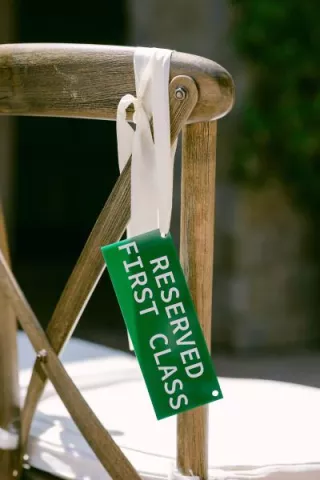
The same principle extends to guest activations. Claudia Brade of Shescloudy Calligraphy describes how live, personalized keepsakes - heat-foiled luggage tags, engraved glassware created on-site - transform a passive guest into a participant. "Guests get to watch their piece come to life in real time, which naturally draws them in and creates a moment of connection. It turns into something they're excited to take home rather than something left behind on a chair." The activation becomes a story guests tell: that was the wedding where something was made for me, in front of me, just for that night.
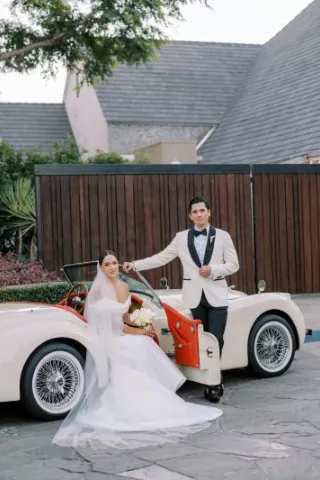
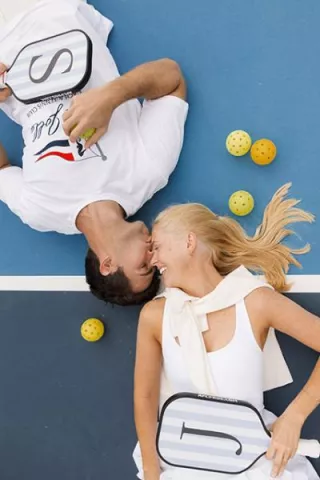
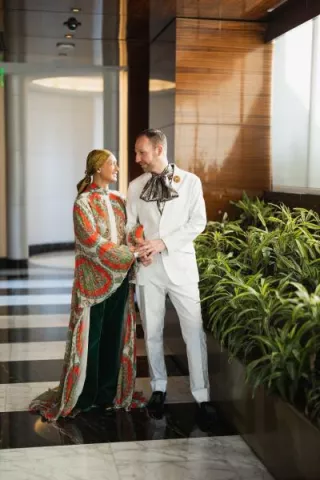
And sometimes, the most meaningful recalibration is the simplest. Chelsea Oler of Friar Tux reminds us that the pressure toward expensive, traditional choices doesn't always serve the couple wearing them: "A second-look outfit brings personality, comfort, and a fresh vibe that's seriously underrated. Sometimes the most memorable looks aren't the most expensive - they're the most authentic."
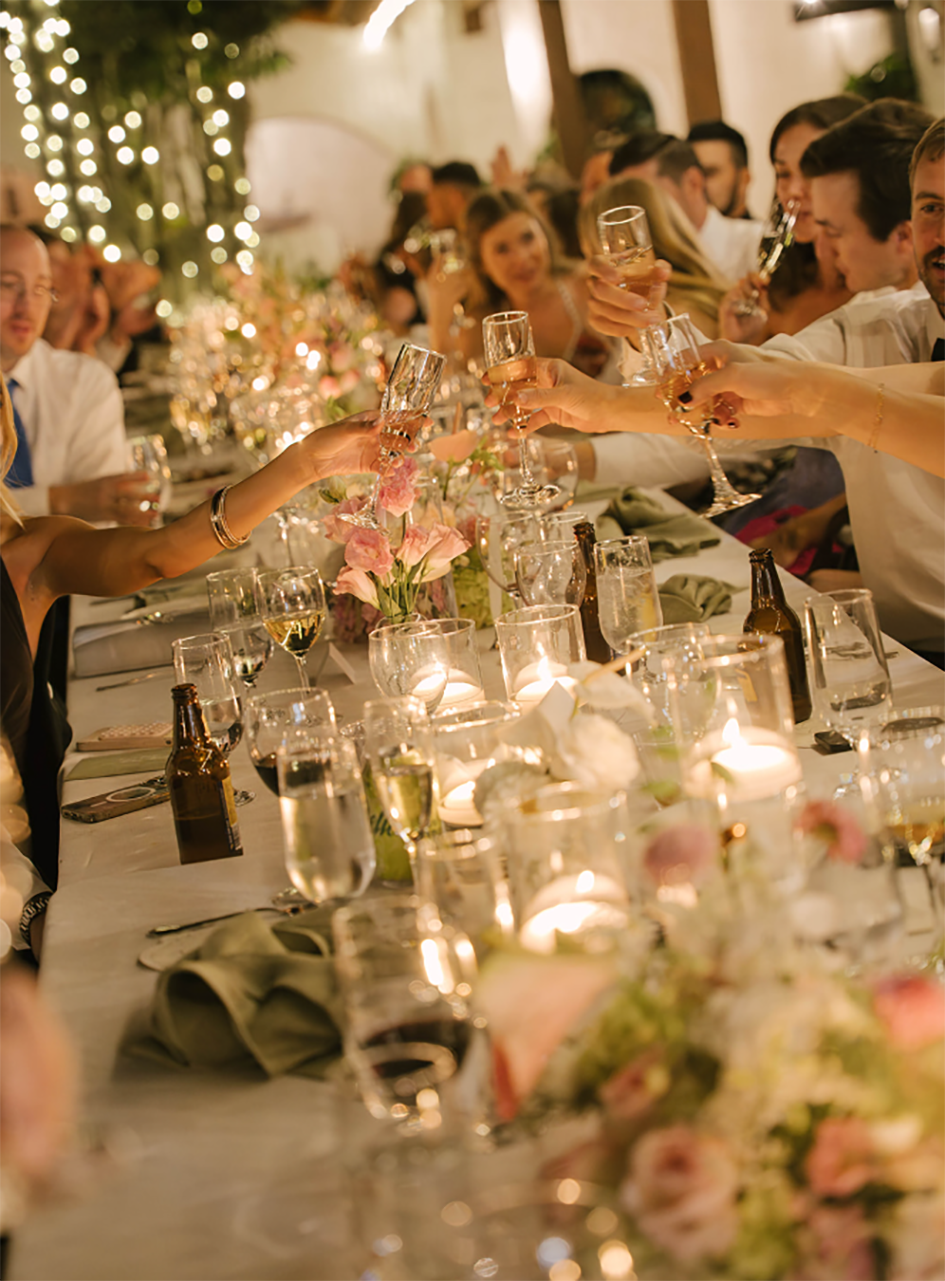
204 Weddings courtesy of Monge Amore Events
Main Photo by Emily Em Photography courtesy of I DO Need You